
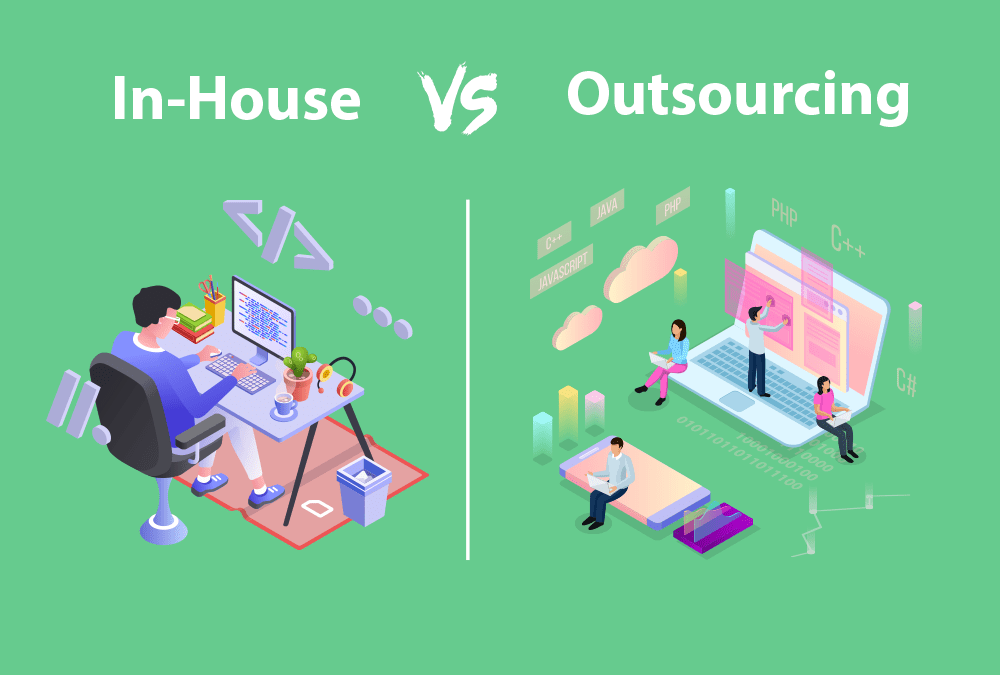
For small business owners, choosing between outsourcing and building in-house teams is one of the most critical decisions they’ll face. Each approach comes with its own set of advantages and challenges, and the right choice depends on factors like your business needs, budget, and long-term goals.
Outsourcing involves delegating specific tasks or projects to third-party providers, often specialists in their field, while an in-house team consists of employees directly hired and managed by your business. Both models have their merits, and understanding the nuances of each can help you make an informed decision that benefits your business in the long run.
In this article, we’ll explore the differences between outsourcing and in-house teams, the pros and cons of each, and how to determine which option is best for your small business.
What Is Outsourcing?
Outsourcing is the practice of hiring external professionals or companies to handle specific tasks or services. These external providers can be freelancers, agencies, or specialized firms, and they typically work remotely or independently from your core team.
Outsourcing has become a popular solution for small businesses, particularly in areas like IT support, marketing, bookkeeping, and customer service. According to a report by Statista, the global outsourcing market was valued at $92.5 billion in 2019 and continues to grow as businesses seek cost-effective solutions to enhance productivity. Source.
Examples of Commonly Outsourced Functions:
- IT Support: Managing software updates, cybersecurity, or troubleshooting.
- Digital Marketing: Running social media campaigns or search engine optimization (SEO).
- Accounting: Handling payroll, tax preparation, and financial reporting.
- Customer Service: Offering 24/7 support through call centers or chatbots.
What Are In-House Teams?
In-house teams are employees hired directly by your business to perform specific roles. These individuals work exclusively for your company, often on-site or in a hybrid capacity, and are integrated into your organizational structure.
In-house teams are typically responsible for tasks that are central to your business’s identity and operations. For example, product development, leadership roles, and core customer service are often handled internally to maintain full control over quality and execution.
While in-house teams offer familiarity and consistency, they also come with significant costs and administrative responsibilities. According to the U.S. Bureau of Labor Statistics, labor costs—including wages, benefits, and payroll taxes—account for nearly 70% of total business expenses for most companies. Source.
The Pros and Cons of Outsourcing
Outsourcing offers small businesses flexibility and access to specialized skills, but it’s not without its challenges. Let’s dive into the advantages and disadvantages:
Advantages of Outsourcing
1. Cost Savings
One of the biggest reasons small businesses choose outsourcing is the potential for cost savings. By outsourcing tasks to countries with lower labor costs or hiring freelancers on a per-project basis, businesses can significantly reduce expenses related to wages, benefits, and overhead.
Example: A small graphic design studio outsourced website development to a freelancer in Eastern Europe, cutting costs by 50% compared to hiring a full-time developer.
2. Access to Specialized Skills
Outsourcing allows businesses to work with professionals who specialize in specific areas, such as SEO, app development, or video production. This ensures high-quality results without the need to train or onboard new employees.
3. Scalability
Outsourcing provides the flexibility to scale up or down quickly based on business needs. For example, seasonal businesses can outsource customer support during peak periods without committing to permanent hires.
Disadvantages of Outsourcing
1. Lack of Control
Since outsourced teams operate independently, you may have less control over how tasks are completed. This can be particularly challenging for businesses with strict quality standards.
2. Communication Barriers
Time zone differences, language barriers, and cultural differences can complicate collaboration, potentially leading to delays or misunderstandings.
3. Data Security Risks
Sharing sensitive business information with external providers increases the risk of data breaches. Businesses must implement strict security protocols and ensure compliance with data protection regulations.
Table: Pros and Cons of Outsourcing
| Pros | Cons |
|---|---|
| Cost-effective for specialized tasks | Limited control over processes |
| Access to global talent | Potential communication challenges |
| Flexible and scalable | Data security concerns |
The Pros and Cons of In-House Teams
While outsourcing offers flexibility, in-house teams provide consistency and a deeper sense of ownership. Here’s a breakdown of their benefits and drawbacks:
Advantages of In-House Teams
1. Full Control
With an in-house team, you have direct oversight of daily operations and can ensure that work aligns with your company’s standards and goals.
Example: A family-owned bakery prefers an in-house marketing team to create promotional campaigns that reflect the brand’s personal touch and community values.
2. Stronger Team Collaboration
In-house employees work closely together, fostering collaboration and a shared sense of purpose. This proximity can lead to better problem-solving and innovation.
3. Long-Term Commitment
Employees who are part of an in-house team often feel a stronger connection to the company’s mission, which can result in higher engagement and loyalty.
Disadvantages of In-House Teams
1. Higher Costs
Hiring in-house employees comes with significant expenses beyond salaries, including benefits, office space, and equipment.
Statistic: The average cost of hiring a new employee in the U.S. is $4,129, according to the Society for Human Resource Management (SHRM). Source.
2. Limited Expertise
Small businesses may struggle to find local candidates with the specialized skills needed for certain roles, limiting the team’s capabilities.
3. Slower Scalability
Expanding an in-house team requires time and resources for recruitment, training, and onboarding, making it harder to adapt quickly to changing business needs.
Table: Pros and Cons of In-House Teams
| Pros | Cons |
|---|---|
| Full control over work processes | Higher costs for salaries and benefits |
| Strong team collaboration | Limited access to specialized skills |
| Long-term commitment from employees | Slower scalability |
How to Decide: Outsourcing vs. In-House Teams
Choosing between outsourcing and building an in-house team depends on several factors, including your budget, business goals, and the nature of the tasks at hand.
Key Questions to Consider:
- What is your budget? Outsourcing is often more cost-effective, especially for small businesses with limited resources.
- How critical is the task to your core operations? For tasks central to your business identity, in-house teams may be a better choice.
- Do you need specialized expertise? Outsourcing allows access to global talent for niche roles.
- How quickly do you need to scale? If you need immediate support, outsourcing offers greater flexibility.
To Sum Up
Outsourcing and in-house teams each have unique advantages and challenges, and the right choice depends on your business’s specific needs. While outsourcing offers cost savings, flexibility, and access to specialized skills, in-house teams provide control, collaboration, and a stronger sense of ownership.
By carefully evaluating your goals, resources, and priorities, you can strike the right balance between the two approaches, ensuring your small business remains competitive and resilient.